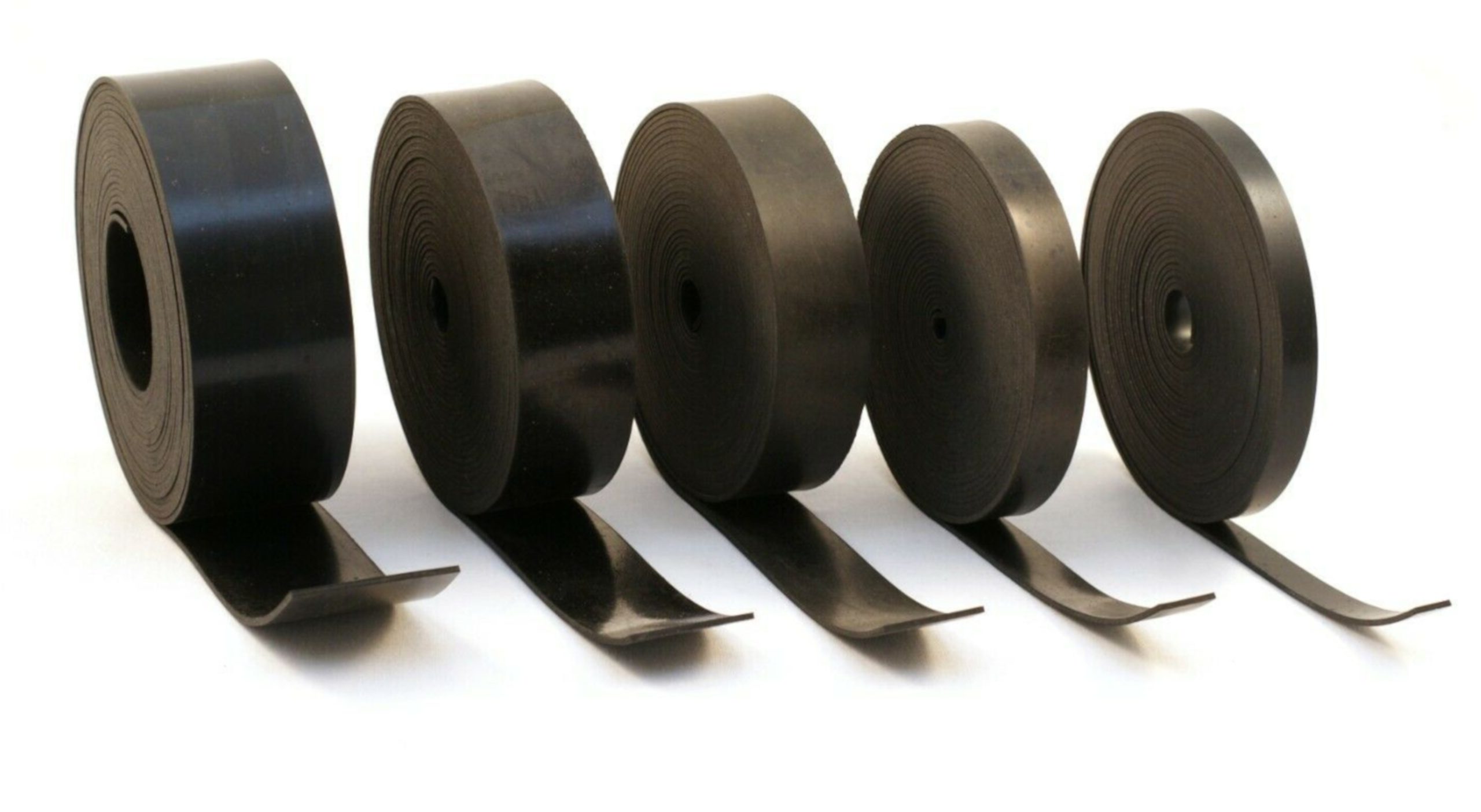
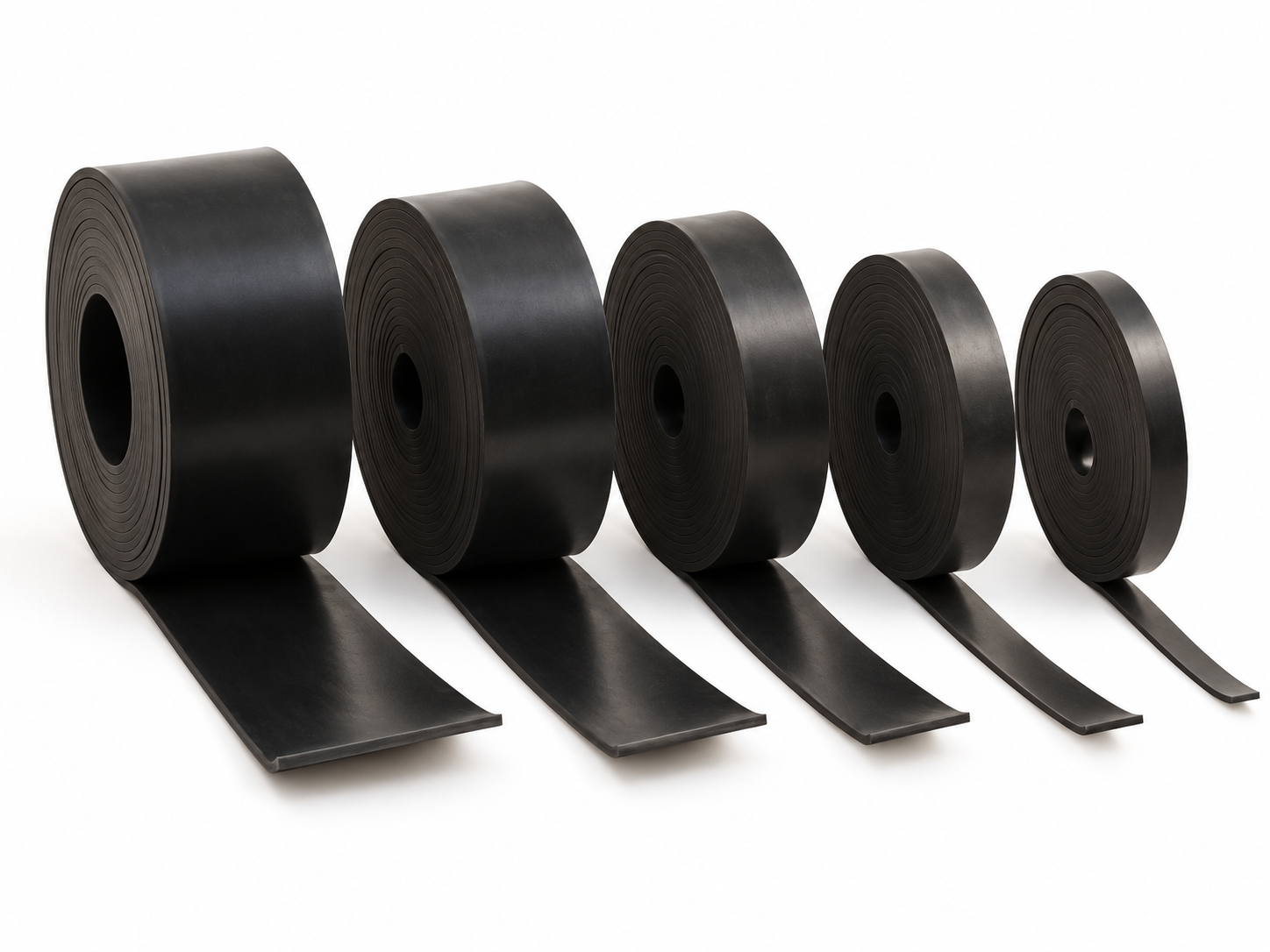
Rubber strips are useful for sealing gaps, cushioning components and protecting surfaces. However, a flat solid strip and a compressible sponge seal do different jobs. Choosing the right material, size and profile is the starting point for a successful fit.
At The Metal House, our solid rubber strips come in several widths and thicknesses. We also stock sponge and self-adhesive seals for projects that need a softer, compressible material.
A rubber strip is a continuous, relatively narrow length of material. Flat strips can provide flexible barriers, protective layers or spacers. The best option depends on whether the material needs to bend, resist contact or compress.
A shaped extrusion is different. A U-channel grips an exposed edge, while a bulb seal compresses against a closing surface. Neither is automatically interchangeable with a flat strip.
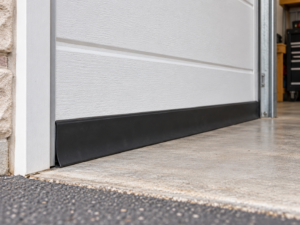
A solid rubber strip has a dense, non-foam structure. Typical uses include garage and shed door weather strips, cushioning, vibration reduction and preventing rubbing between metal components.
The Metal House’s black neoprene rubber range offers thicknesses from 1.5mm to 6mm and several widths. These strips are suitable for indoor and outdoor use; choose dimensions that match the space and intended movement.
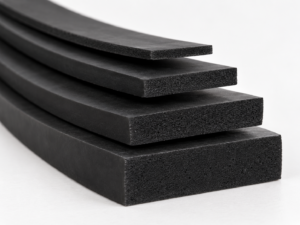
Sponge rubber has a cellular structure and compresses more easily than a similar solid strip. It is useful when two surfaces close together, such as a cabinet door and its frame.
For a compressible gasket or a soft sealing face, check sponge products first. A strip that is too thick may stop a lid or door closing properly.
For a suitable clean surface, self-adhesive sponge can simplify installation. The Metal House’s self-adhesive neoprene sponge has peel-off backing and comes in multiple widths and thicknesses on 10-metre rolls.
Adhesive backing does not replace correct sizing. Measure the gap, allow for compression and check that the mounting surface is clean, dry and suitable for adhesion.
Different compounds have different resistance to weather, oil, heat and wear. Check the specification for the actual product rather than assuming that every strip made from the same broad material family performs identically.
Neoprene is used in The Metal House’s flat solid strip range and self-adhesive sponge range. Compare the product’s profile and dimensions with your original strip or intended application.
EPDM is often used for weather-exposed seals because it resists weathering and ozone. The Metal House also stocks shaped EPDM sponge seals, which differ from its flat solid neoprene strips.
Nitrile can suit oil-exposed applications, while silicone is used for particular temperature requirements. Natural rubber and SBR appear in other general-purpose products. Do not assume that every compound is stocked as a flat strip.
Solid strips can protect a workbench, separate components, reduce chafing or form a simple weather barrier along a garage door. Select the thickness and grade to suit the contact and movement involved.
For an enclosure or closing panel, a sponge seal may fill the gap more effectively. Where the job is protecting an exposed edge, look at a shaped edge trim instead.
Measure the available space before choosing a strip. Width describes how much surface it covers; thickness describes how far it projects into the gap. Both affect how the fitted part behaves.
Consider whether the strip must bend around a corner, remain flat or compress. If replacing an old piece, remember that wear or flattening may have altered its original dimensions.
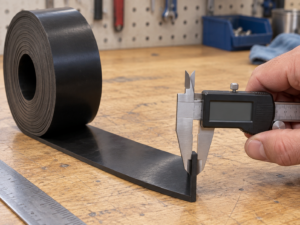
Measure the complete run, allowing for corners and changes of direction. Add a small amount for trimming. For several pieces, add their lengths together before selecting your quantity.
The Metal House sells solid neoprene strips by the metre, supplying orders over one metre as a continuous length up to 10 metres. Check the product details if you need longer uninterrupted runs.
Mark the required length, then cut with a suitable sharp tool on a protected surface. Choose a fixing method appropriate to the rubber and mounting surface; not every solid strip has adhesive backing.
For a compressible seal, check that the door or panel closes properly after fitting. If you are unsure which profile suits your project, contact The Metal House.
A ready-made strip is useful for a consistent narrow width and a long run. For broad pieces or custom-cut gaskets, rubber and sponge sheet may be more practical.
Choose according to the shape you need and the cutting involved. A pre-cut strip can save preparation time when your project calls for a straightforward length.
Compare widths and thicknesses in our solid rubber strip range and select the length needed for your project. The product pages show the available size options.
If a flat strip is not quite right, explore our wider rubber extrusions range for sponge, edge trims and shaped seals. Start with the job the material needs to do.
If you mean a narrow length of material for sealing or cushioning, the usual product term is “rubber strip”. A stripe can also mean a decorative band, so it helps to clarify the intended use.
Solid rubber is dense and often used for contact, barrier or protection purposes. Sponge rubber compresses more easily, making it useful between closing surfaces.
Yes, if the selected product suits the conditions. The Metal House describes its solid neoprene strip range as suitable for indoor and outdoor use; check the specification for demanding environments.
Rubber skirting is a flexible barrier fitted along an edge. Its uses include limiting material spillage beside a conveyor or providing a weather barrier around an opening.